A gentle mobile companion for PTSD healing through art — transforming drawing, reflection, and place-based discovery into a soft, supportive daily practice rooted in expressive therapy.
Daffodils began with a question: can a mobile app hold space for healing the way a good therapist does — gently, without judgment, and with the right prompt at the right moment? The project explores art's clinical role in PTSD recovery, specifically how drawing, reflection, and exposure to art environments can support emotional processing and nervous system regulation.
The design process moved from user persona research and journey mapping through low-fidelity wireframing to a fully resolved high-fidelity visual system — a daffodil-yellow, soft-edged interface that communicates safety and warmth from the first screen.
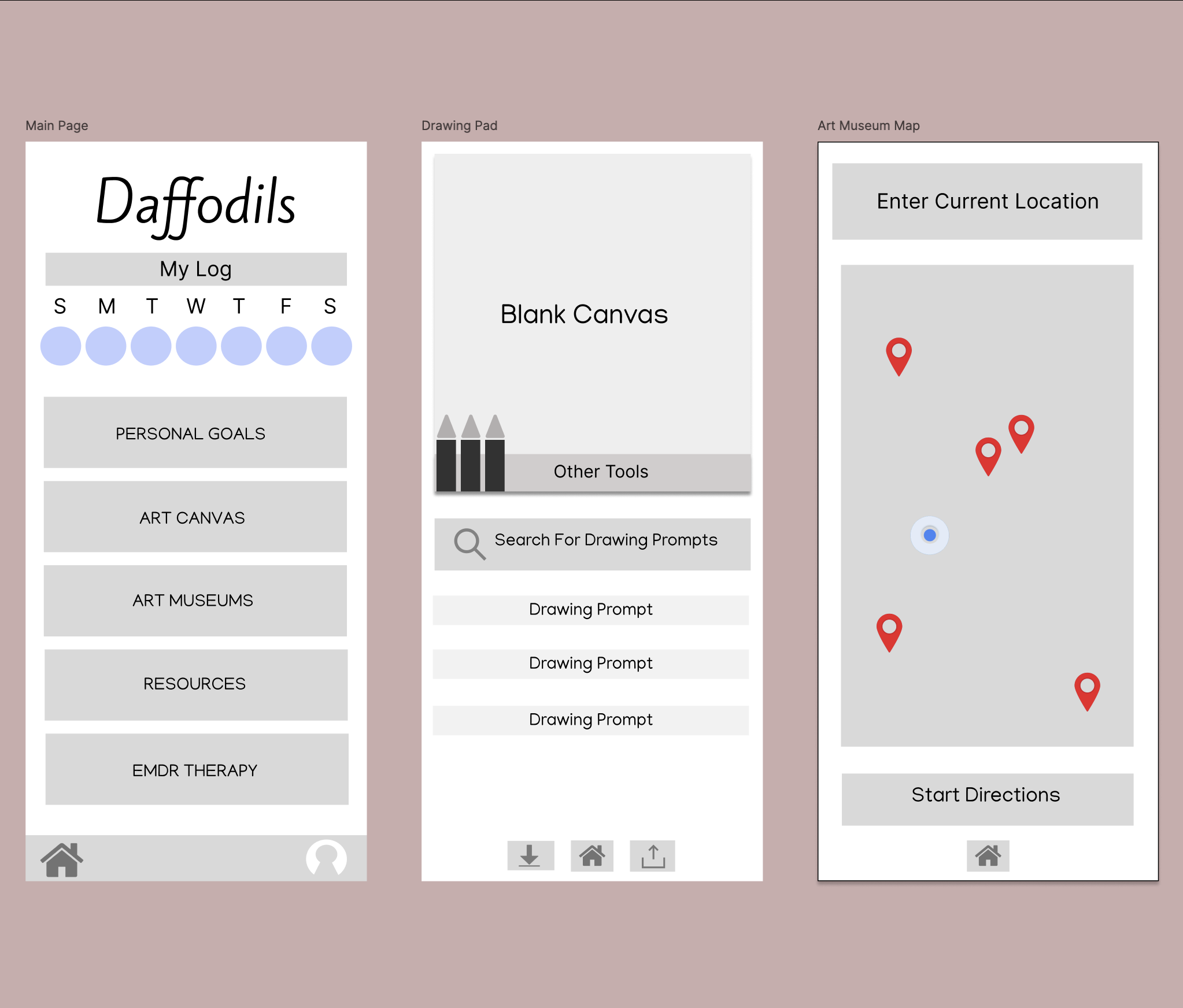
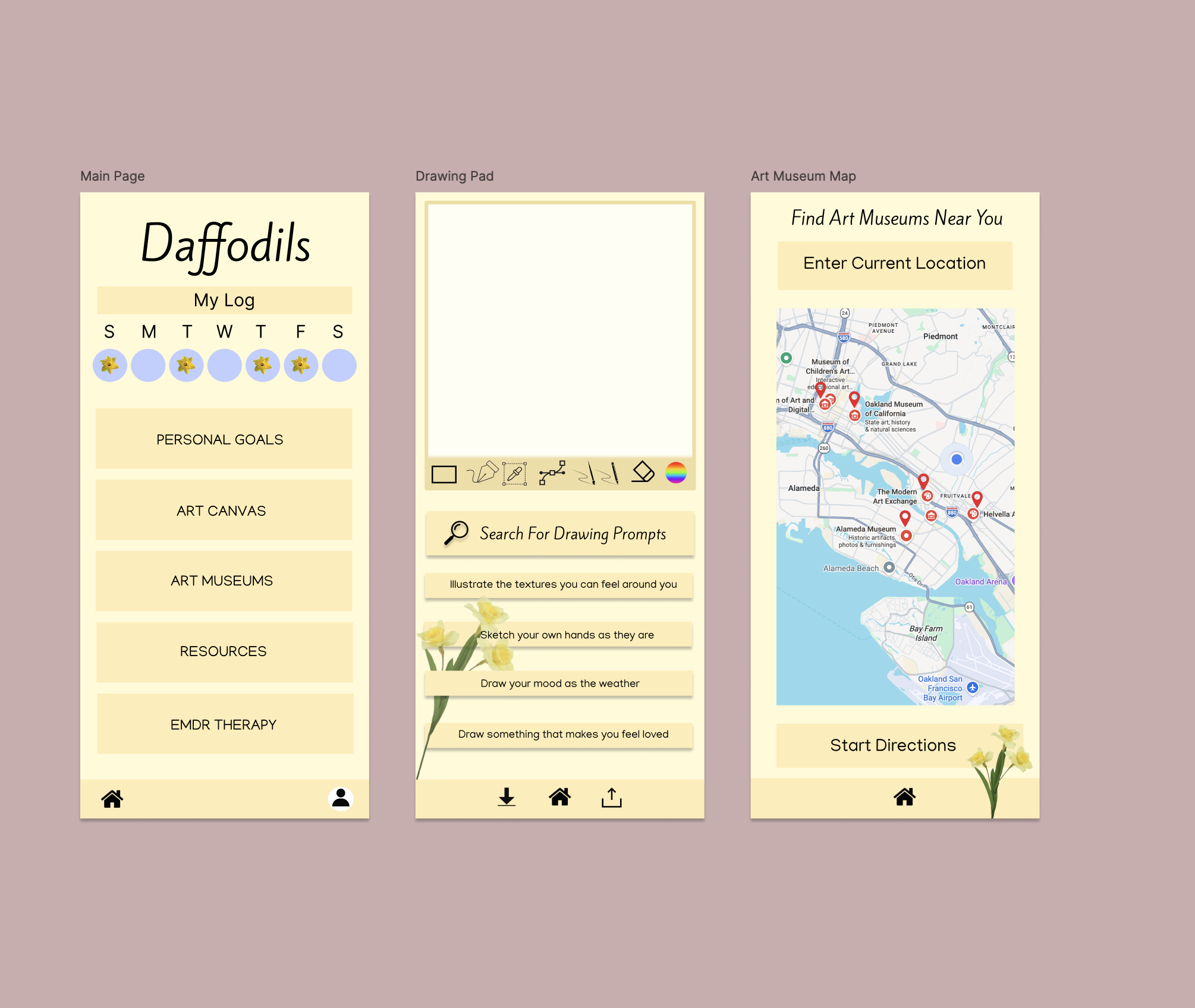
Streak-based tracker with daffodil badges that reward consistency without shame. Weekly log visible at a glance — progress without pressure.
A blank canvas with contextual drawing prompts — "illustrate the textures you can feel around you," "sketch your own hands as they are" — designed to lower the barrier to expressive mark-making.
Location-based discovery of nearby art spaces. Marks places visited and saved — creating a personal map of art engagement as part of the healing practice.
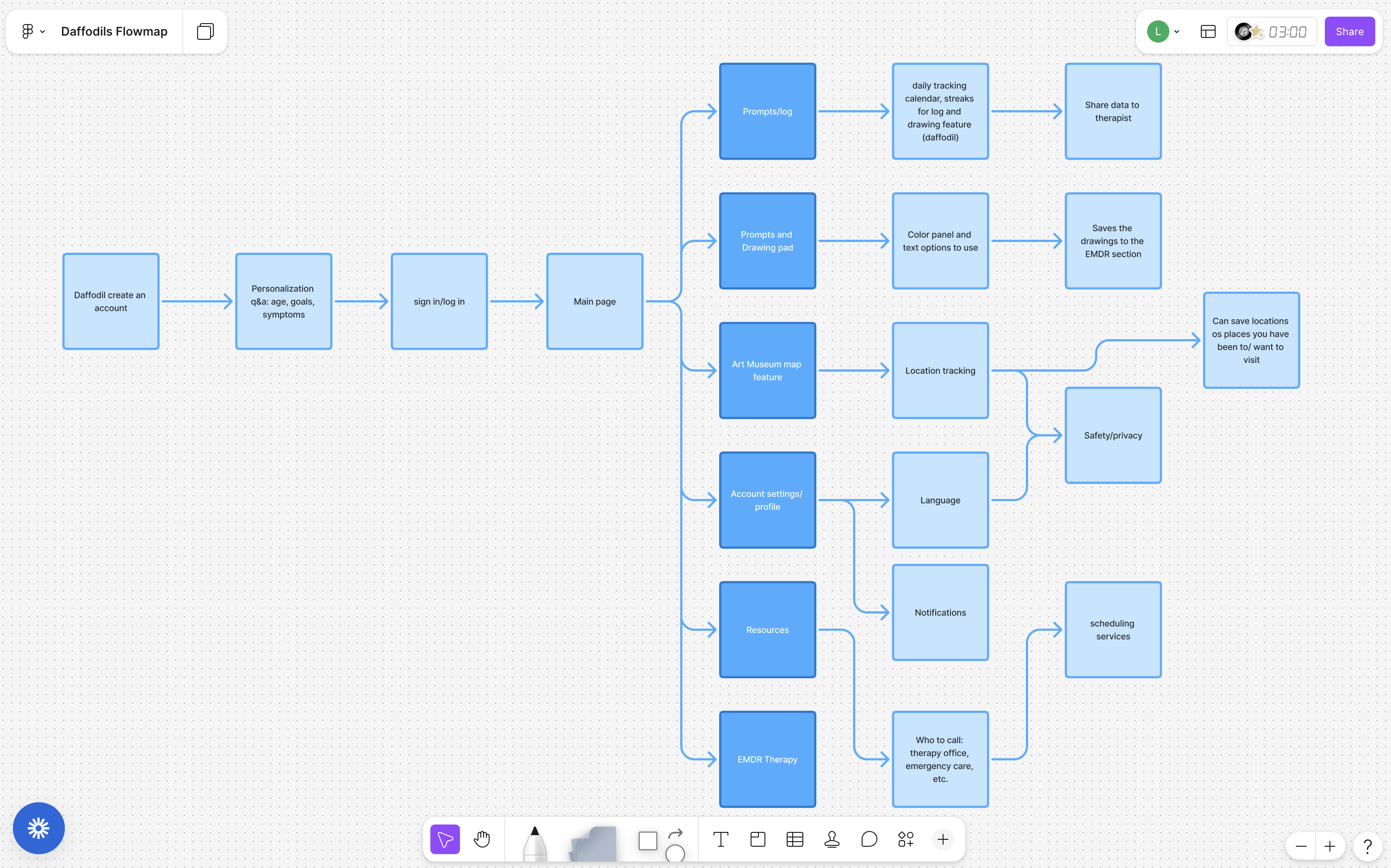
Structured resources for EMDR therapy including session drawings, therapist data sharing, emergency care contacts, and scheduling tools — bridging clinical care and daily digital practice.
The visual system draws from the daffodil's intrinsic symbolism — renewal, resilience, the bloom that comes after difficulty. The warm yellow palette, rounded forms, and generous white space communicate that this is a safe environment before a single word is read.
Typography uses a script wordmark for the app name (human, handmade) alongside clean sans-serif body text (readable, calm). Icon system uses simple, non-clinical line weights.
Daffodil illustration elements appear throughout the UI as grounding motifs — in empty states, as streak rewards, and as decorative anchors at screen edges.
The hardest design work is for the moments when someone is already overwhelmed. Every choice has to earn its place.
Daffodils taught me that designing for vulnerable users demands a different kind of discipline. Every interaction pattern, every piece of copy, every color choice had to pass one test: does this make someone feel safer, or does it add friction to a moment that's already hard? That constraint made me a more precise designer.