A speculative dining tool that modulates food temperature at the moment of contact — unlocking new dimensions of flavor perception through precision thermal control, object recognition, and embedded sensory intelligence.
Temperature and taste are inseparable. Cold suppresses sweetness; warmth amplifies saltiness; the right heat can transform a dish from merely edible to genuinely pleasurable. The Thermoregulating Fork Design asks: what happens if we bring precise thermal control to the moment between food and mouth?
The concept embeds a microbattery, an MCU, a thermoregulation chip, and an object-recognition system inside a fork — allowing the device to identify the food being consumed and automatically adjust its surface temperature to optimize flavor perception before each bite.
The project was developed through iterative sketching, component research, and user-centered questioning: how do you make a smart fork feel like a fork?
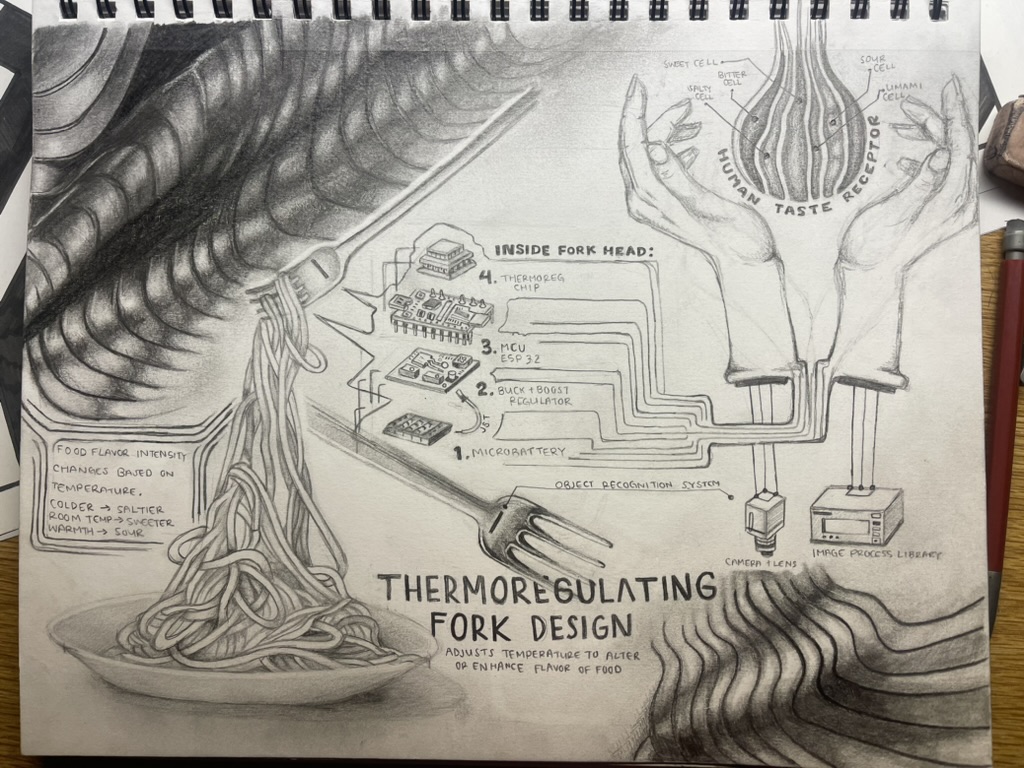
Four components work in sequence to deliver precision-calibrated temperature at the tine surface — all within a form factor small enough to remain familiar as an everyday dining tool.
A miniaturized camera lens and paired image-processing library identify food type as the fork approaches the plate. The model has been trained on common food categories — pasta, proteins, vegetables, desserts — mapping each to a target temperature profile.
The system operates in under 200ms from recognition to temperature adjustment, making the thermal modulation feel ambient rather than deliberate.
Peaks at room temperature. Suppressed by cold. The fork can amplify dessert sweetness by pre-warming tines before contact with cold confections.
Enhanced at lower temperatures. For users reducing sodium intake, cooling tines before contact with savory foods can intensify the perceived salt signal from a smaller actual quantity.
Most pronounced at body temperature. Cold tines reduce bitterness perception in dark vegetables and coffee-infused dishes — smoothing compounds that would otherwise dominate.
Amplified by warmth. Heating tines before contact with citrus-dressed or fermented foods heightens the acid brightness, creating a more vibrant first impression.
Broadly stable but depth increases with slight warmth. Warming tines before contact with protein-rich foods pulls forward the savory richness that cold temperatures can flatten.
The fork's temperature mode becomes a form of personalization — allowing users to tune their sensory experience based on food type, preference profile, and dietary goals.
The most underexplored sense in product design is the one happening in your mouth.
This project started as a thought experiment and became a serious technical exploration. The challenge of keeping a smart fork looking like a fork — maintaining the familiar weight, balance, and proportion of a utensil while housing meaningful technology inside — is a masterclass in the tension between innovation and usability. I want to keep designing at that edge.